
How I optimized my training

Pavel Telitsyn
Jun 23, 2026
Disclaimer: This content is for informational purposes only. I am not a physician, and nothing below is medical advice. Consult a qualified professional before adopting any practice or supplement. Everything described is my personal experience combined with a review of available research.
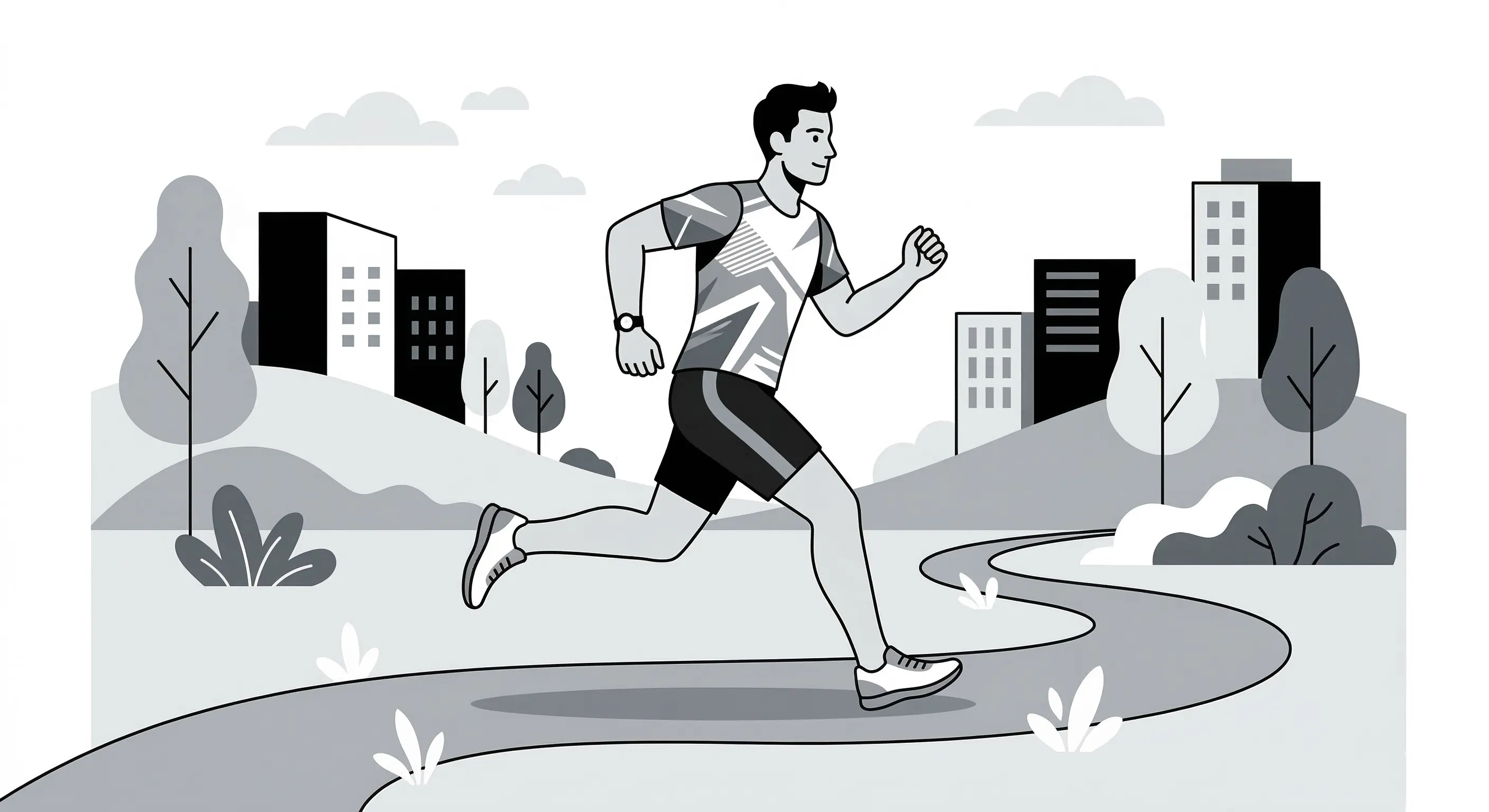
What physical activity actually does: the science
Building physical activity into your life produces five key systemic improvements:
- Longevity and reduced mortality: Clinical data show a 30–40% reduction in all-cause mortality risk. Movement is your single best hedge against biological decline.
- Cognition: Better brain function and memory across all age groups.
- Immune resilience: A stronger immune system and a sustained anti-inflammatory state.
- Psychological resilience: Physical activity is a frontline defense against neurochemical imbalance and reduces depression risk by 20–30%.
- Energy production and reduced fatigue: Building new, healthy mitochondria, which increases cellular energy (ATP) output.
My training protocol
- Strength training. Strength training supports bone density, posture, and insulin sensitivity. Muscle mass declines with age — a process called sarcopenia — and resistance training slows it down. A strong body handles injury better and recovers faster from physical and psychological stress.
- Zone 2. Zone 2 heart rate (60–70% of maximum heart rate, HRmax). The simplest check that I'm actually in Zone 2: I can hold a full conversation while running. If I'm gasping between words, the pace is too high. Zone 2 work drives mitochondrial biogenesis, trains the body to use fat as fuel, strengthens the heart, and speeds up cellular recovery.
- Stretching and mobility. It lowers arterial stiffness, improves local blood flow, activates the parasympathetic nervous system, and preserves range of motion.
- VO2 max training. High-intensity intervals using the 4×4 protocol: four minutes of work at 85–95% of HRmax, four minutes of active recovery. This is the most effective way to raise VO2 max, which is directly linked to longevity and reduced all-cause mortality.
My principles
- Injury prevention. Injuries impose serious limits, create imbalances, and lead to long-term complications. Caution is worth it, even if it means dropping certain exercises.
- Habit formation. I train every day, no matter what (barring injuries or medical contraindications). It takes time to build, but it's worth it.
- Movement throughout the day. I try to move all day long: 5–10 minutes after meals, a quick stretch every 30–60 minutes, walking when I'm thinking through a problem.