
How I Optimized My Sleep

Disclaimer: This content is for informational purposes only. I am not a physician, and nothing below is medical advice. Consult a qualified professional before adopting any practice or supplement. Everything described is my personal experience combined with a review of available research.
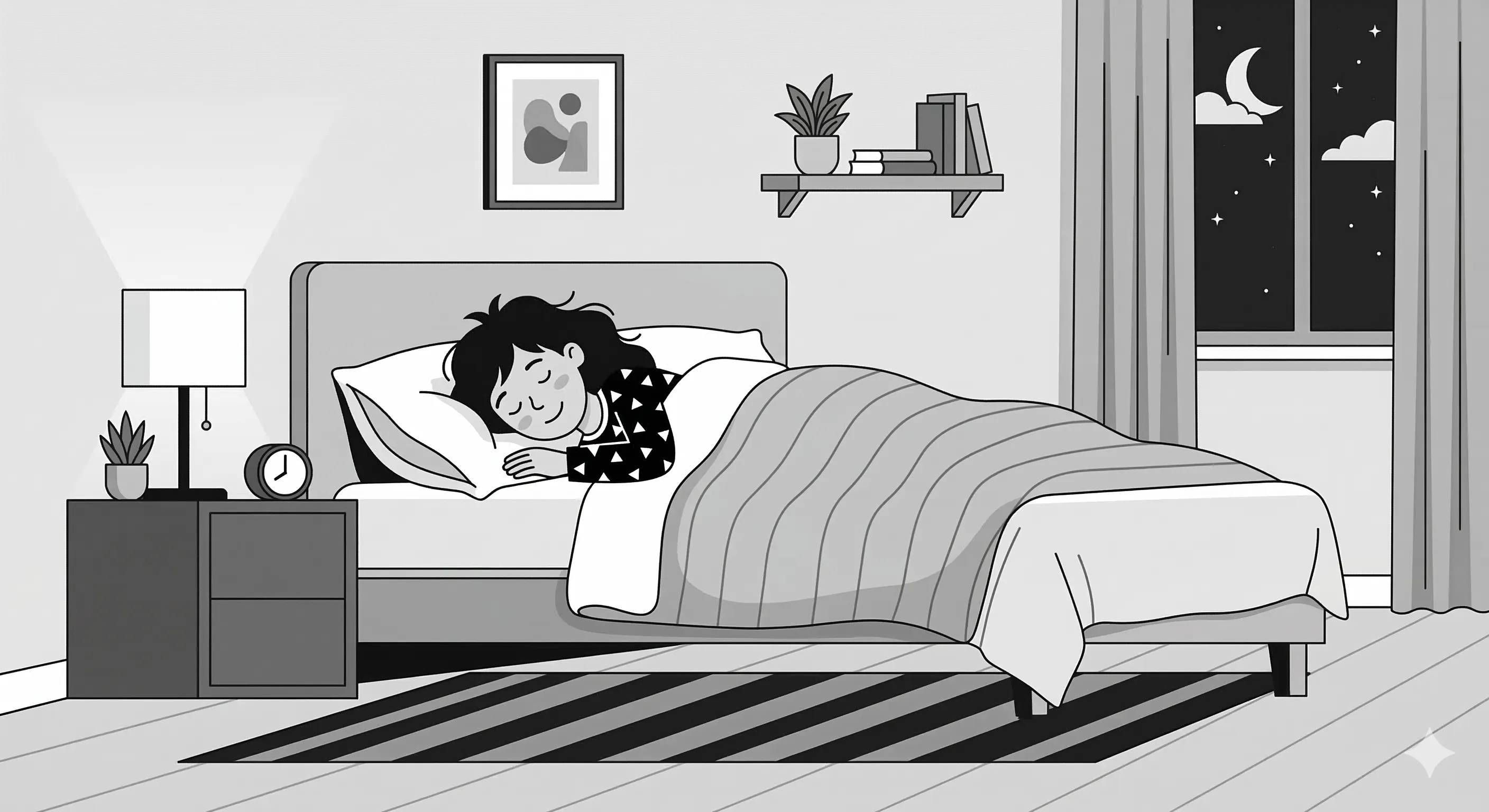
Quality sleep is the single highest-leverage habit I've found. It took me years of experiments to build the systems that made my recovery genuinely efficient. In this article I'll share what works for me, grounded in the science.
Sleep is an active neurobiological process. While you sleep, the brain runs its "waste disposal" (the glymphatic system), consolidates memory, restores hormonal balance, and reinforces immunity.
Why quality sleep is foundational
- Cognition. Even a single night of sleep deficit reduces reaction time and focus to levels comparable to alcohol intoxication.
- Metabolism. Poor sleep disrupts the balance of leptin and ghrelin, which drives overeating and raises the risk of insulin resistance.
- Immunity. During deep sleep, the body produces the cytokines it needs to fight infection and inflammation effectively.
- Hormonal regulation. Night rest is critical for hormonal balance — it's when circadian rhythms are tuned and cortisol is regulated. Evening blue light can suppress melatonin secretion.
Below is the protocol I built, rooted in physiology and research, that gave me the biggest wins.
1. Anchor your circadian rhythm
I wake up and go to bed at the same time every day, weekends included. Consistency locks in the internal clock (the SCN), making it easier to fall asleep and wake up naturally without an alarm.
2. Darkness in the evening
For the last hour before bed, all lights in my home are off — no more than ~30 lux, just one warm lamp in a corner. Light brighter than ~50–100 lux already suppresses evening melatonin in some people; ~200 lux suppresses it in most. Screens in a dark room deliver 30–50 lux to the retina; ceiling lights deliver 100–300 lux.
3. Bedroom temperature and air quality
I keep my bedroom at 18–20°C and manage ventilation to stop CO₂ from accumulating overnight. To transition into deep sleep, core body temperature has to drop by roughly 1°C, and CO₂ buildup in a closed room measurably reduces sleep efficiency and triggers micro-awakenings.
4. No caffeine within 10 hours of bedtime
My last coffee or stimulant is at least 10 hours before bed. Subjective alertness lasts only 3–5 hours, but caffeine's average half-life is 5–6 hours — up to 7–10 hours in slow metabolizers. As a result, caffeine molecules keep blocking adenosine receptors deep into the night, eroding both the depth and the architecture of sleep.
5. Morning light
Within the first 30 minutes of waking, I get outside — no sunglasses — for 10 minutes, extending to 20–30 minutes on overcast days. Morning light is the primary circadian anchor for the SCN and sets the timing of the evening melatonin rise. Going through glass doesn't work: indoor light near a window is 20–100× dimmer than outdoor light.
6. No food within 4 hours of bedtime
My last meal is at least 3–4 hours before sleep. Digestion is energy-intensive and raises core body temperature, which interferes with the transition into deep sleep and can trigger nighttime awakenings.
7. A chill hour before bed
I dedicate the last hour of the day to winding down. No work, no stressful news, no intense problem-solving. This signals to the nervous system that it's time to prepare for sleep.
8. Supplements
I take 200 mg of magnesium glycinate 1–2 hours before bed. I use melatonin (3 mg) only occasionally, to correct jet lag. Glycinate improves sleep quality, and keeping melatonin rare avoids the receptor desensitization that comes with daily use.
References
- 1.Acute Sleep Deprivation Increases Serum Levels of Neuron-Specific Enolase (NSE) and S100 Calcium Binding Protein B (S-100B) in Healthy Young Men.
- 2.Sleep restriction increases the desire for high-calorie foods.
- 3.Sleep and immune function.
- 4.Light at night suppresses melatonin.
- 5.Circadian rhythms and sleep.
- 6.Evening light exposure and melatonin suppression.
- 7.Effects of thermal environment on sleep.
- 8.Bedroom air quality and sleep.
- 9.Ventilation and sleep quality.
- 10.Caffeine effects on sleep.
- 11.Morning light treatment and circadian rhythms.
- 12.Late eating and sleep architecture.